The Yoke You Were Not Meant to Carry
Short answer: A meditation on why trying to figure everything out and working yourself thin is the wrong path. Rooted in Matthew 11, the Psalms, and Proverbs, with a five-point action plan for trading anxious toil for the easy yoke of Christ.
On why trying to figure everything out, and working yourself thin to do it, is the long road that leads nowhere good.
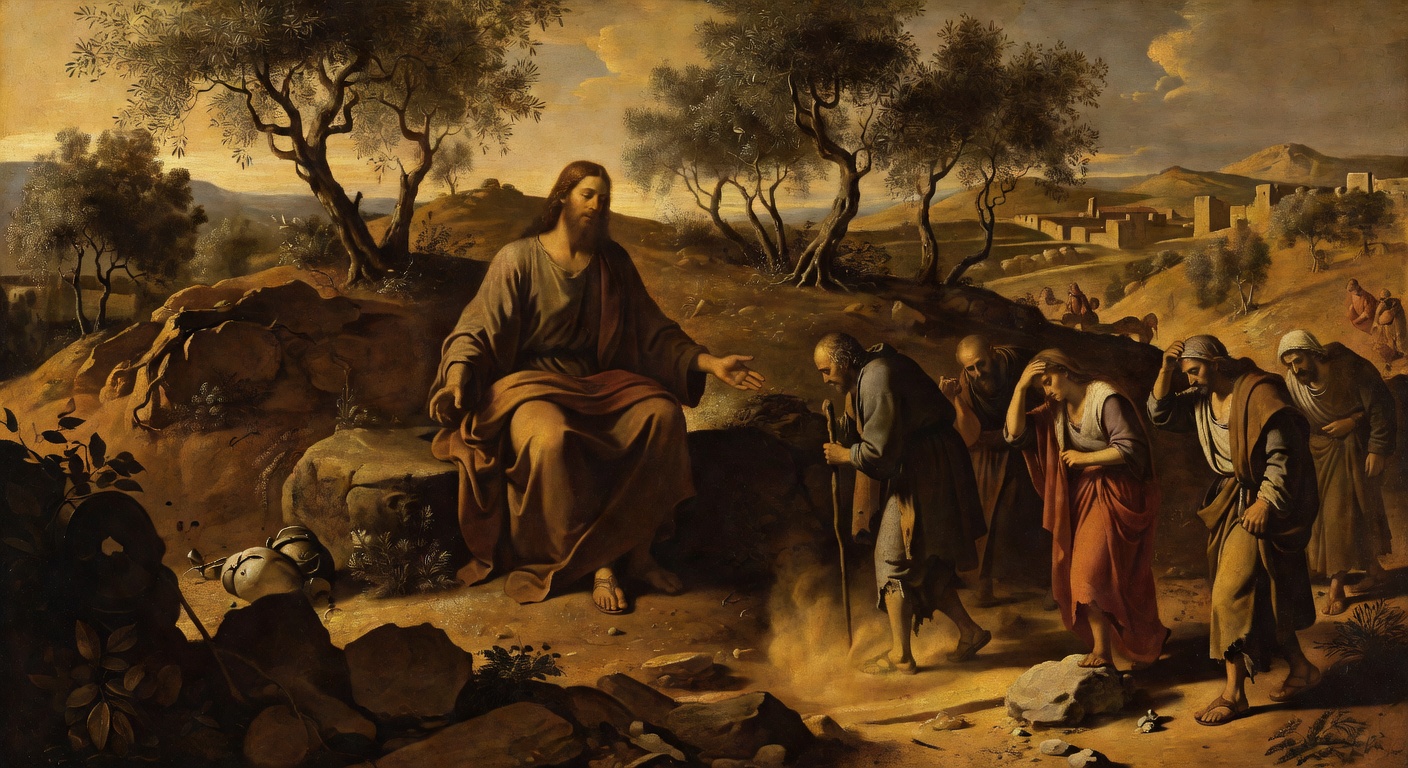
There is a particular kind of tired that no amount of sleep repairs. It is the tiredness of a person trying to be the manager of their own life, running the projections, anticipating the failures, pulling extra shifts to outrun a fear that does not have a name. The world calls this responsibility. Scripture calls it a yoke. And it is not the one you were meant to wear.
"Come to me, all you who are weary and burdened, and I will give you rest. Take my yoke upon you and learn from me, for I am gentle and humble in heart, and you will find rest for your souls. For my yoke is easy and my burden is light."
Matthew 11:28–30
Notice He does not say, throw off every yoke. He says, trade yours for mine. The question was never whether you would be yoked. It is which yoke, and to whom. The exhausted person and the resting person are both pulling a load. One is harnessed to Christ. The other is harnessed to the project of self-sufficiency, and that yoke breaks shoulders.
IThe Lie That Sounds Like Wisdom
The lie comes dressed as prudence. I just need to think it all the way through. If I work hard enough now, I’ll be free later. I’ll trust God after I’ve handled this part myself. It sounds like maturity. It is, in fact, a refusal: a quiet, well-mannered refusal of the offer in Matthew 11.
To try to figure everything out is to seat yourself on a throne that was never built to hold you. You were not given the load-bearing capacity to be your own providence. The shoulders ache because they were not designed for that weight. The mind spins because it was not designed to be the final authority on outcomes. You were built to bear a yoke, but a yoke shared with someone stronger.
"Trust in the Lord with all your heart, and lean not on your own understanding. In all your ways acknowledge Him, and He shall direct your paths."
Proverbs 3:5–6
Lean not. That is a posture word. Not think harder. Not plan more carefully. Lean not. Solomon, the wisest man who ever lived, the one most equipped to think his way out of anything, tells you the trap is leaning on your own understanding. And Proverbs doubles back on this warning, in case we missed it:
"There is a way that seems right to a man, but its end is the way of death."
Proverbs 14:12
The way seems right. Your plan feels reasonable. The figuring-out feels productive. That is exactly the warning. Your own understanding is not a reliable compass for a life that ultimately belongs to God.
IIOverwork as Functional Atheism
This is the harder thing to say plainly: when a Christian works themselves to the bone trying to secure what God has already promised to provide, they are not being diligent. They are quietly behaving as if there is no Father. Not in doctrine, the doctrine is intact, but in practice. The hands say what the mouth will not.
"Therefore I tell you, do not be anxious about your life, what you will eat or what you will drink, nor about your body, what you will put on. Is not life more than food, and the body more than clothing?"
Matthew 6:25
Jesus is not condemning work. Paul tells us a man who will not work should not eat. The condemnation is reserved for anxious work, work that has stopped being a participation in the Father’s provision and become a substitute for it. You can tell the difference by what happens when you stop. Holy work leaves rest possible. Anxious work makes rest feel like falling.
And then there is Psalm 127, perhaps the most direct rebuke to the overworker in all of Scripture:
"Unless the Lord builds the house, those who build it labor in vain. Unless the Lord watches over the city, the watchman stays awake in vain. It is in vain that you rise up early and go late to rest, eating the bread of anxious toil; for He gives to His beloved sleep."
Psalm 127:1–2
Read that again. The bread of anxious toil. The early mornings and the late nights, sustained on adrenaline and dread, the psalmist calls it vain. Not noble. Not honorable. Vain. Empty. Because the foundation underneath an anxious worker is sand: the unspoken belief that if I let go, it all falls apart. The psalm answers that fear in eight words: He gives to His beloved sleep.
"Be still before the Lord and wait patiently for Him; fret not yourself over the one who prospers in his way, over the man who carries out evil devices."
Psalm 37:7
IIIThe Garden, Not the Office
Look at where He went when the weight of what was coming pressed in. Not to a strategy session. Not to a sharper plan. To a garden, in the dark, alone, on His knees. The Son of God models the answer to overwhelming circumstance, and the answer is prayer: the deliberate handing back of what was never ours to carry alone.
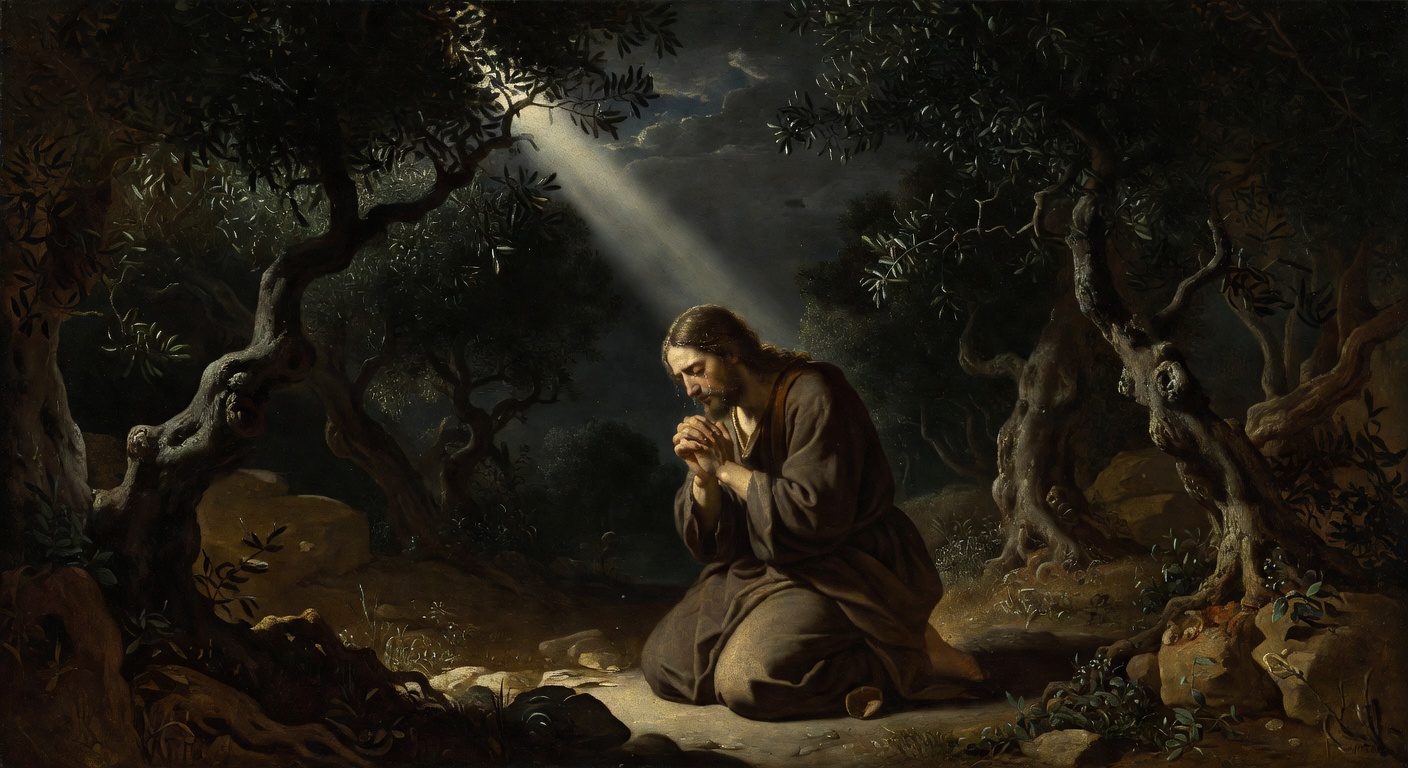
If Christ Himself, facing the cross, did not solve it by reasoning harder, what makes you think your spreadsheet, your fourteenth re-read of the same problem, your refusal to sleep until you have answers, is the right response to your much smaller storm?
"Cast your burden on the Lord, and He will sustain you; He will never permit the righteous to be moved."
Psalm 55:22
Peter, who had watched his Master pray in that garden, would echo this verse decades later: "Casting all your anxieties on Him, because He cares for you" (1 Peter 5:7). Notice the verb. Not set down. Not discuss. Cast. It is the word for what a fisherman does with a net: a full-bodied throwing, the whole weight of the thing released, gone, no longer in your hands.
IVWhat “Easy” Actually Means
"My yoke is easy." It is one of the most misread sentences in the Gospels. He does not mean the Christian life is comfortable. The same Gospels promise tribulation. He means the yoke fits. It is the right shape for the creature wearing it. Your yoke, the one you stitched together yourself out of pride and fear and the conviction that you must not be a burden, does not fit. It chafes because it was never measured to you.
"The Lord is my shepherd; I shall not want. He makes me lie down in green pastures. He leads me beside still waters. He restores my soul."
Psalm 23:1–3

Look at the verbs. He makes me lie down. He leads me. He restores me. The sheep does not negotiate the rest schedule. The sheep does not draft the route to still waters. The sheep is led there. The whole Psalm is a manifesto against self-managed survival.

VThe Practical Shape of Trust
Trust is not passivity. It is not refusing to plan, refusing to work, refusing to take responsibility. Those are not virtues; they are just a different costume for the same self-centeredness. Trust is doing the next right thing in front of you, and stopping at the boundary of what is yours to do. You are responsible for the obedience. The Father is responsible for the outcome. Confusing those two is the seedbed of most modern exhaustion.
"Commit your work to the Lord, and your plans will be established."
Proverbs 16:3
Notice the order. Commit, then establish. Not establish, then commit. The plans get firm after they are handed over, not before. The reason your plans feel so fragile is that you have not let them out of your grip long enough for God to set them. Below is a five-point plan to begin doing exactly that, anchored in Scripture and meant to be lived, not admired.
VIA Five-Point Action Plan
Hand the day over before you touch the work
Psalm 5:3 · Proverbs 16:3Before the laptop opens, before the inbox loads, name the day’s burdens aloud and commit them to the Lord. "In the morning, O Lord, You hear my voice; in the morning I prepare a sacrifice for You and watch" (Ps 5:3). Two minutes. No theatrics. The deliberate first act of the day is a transfer of ownership.
Set a hard stop, and obey it
Psalm 127:2 · Exodus 20:8–10Pick the hour the workday ends. Write it down. When that hour arrives, stop, even mid-sentence, even mid-problem. "He gives to His beloved sleep" (Ps 127:2). The Sabbath was not a suggestion; the command to rest came before the command against adultery. You are not above the rhythm God built into creation. The inbox will still be there tomorrow. Some of it, mercifully, will have resolved itself without you.
When anxiety rises, cast it, do not analyze it
1 Peter 5:7 · Psalm 55:22 · Philippians 4:6–7The moment you feel the spiral start, the looping, the re-checking, the what-ifs, stop and pray it down by name. "Do not be anxious about anything, but in everything by prayer and supplication with thanksgiving let your requests be made known to God. And the peace of God, which surpasses all understanding, will guard your hearts and your minds in Christ Jesus" (Phil 4:6–7). Specific anxieties get specific prayers. Vague casting does not work; God deals in particulars, and so should you.
Refuse to lean on your own understanding
Proverbs 3:5–6 · Proverbs 14:12 · Isaiah 55:8–9When you catch yourself running a fourteenth mental simulation of the same problem, name it for what it is: leaning. Stop the simulation. Ask one honest question instead: What is the next right step I actually have authority over? Do that step. Leave the rest. "For my thoughts are not your thoughts, neither are your ways my ways, declares the Lord" (Is 55:8). Your mental model of the future is not the future. God’s is.
Seek the kingdom first, let the rest be added
Matthew 6:33 · Psalm 37:4 · Psalm 23:1Each week, before you plan the work, plan the worship. Mass or church, Scripture in the morning, sacraments, time with the people God has actually given you to love. "But seek first the kingdom of God and His righteousness, and all these things will be added to you" (Matt 6:33). The promise is in the word added. The things you are killing yourself to provide are things God has already promised to add, once the order of your loves is right.
VIIThe Invitation Still Stands
If you are reading this and you have not stopped striving in a long time, if your default posture is the clenched jaw and the late hour and the open laptop, the invitation in Matthew 11 is not a historical artifact. It is in the present tense. Come. Not come once you have figured it out. Not come after you have proven yourself. Come as you are: tired, half-finished, with the shoulders that ache from a yoke nobody asked you to carry.

Put it down. Not all of it, not forever. Just the part you were never supposed to be carrying. The part that was His all along.